November 27, 2016

The one we truly despise

As with many other forms of social interaction, criticism is centered entirely upon the one delivering it. The person receiving criticism hardly needs an identity since they are merely a platform on which the critic lashes out his or her own self-perceptions. 

In psychology, a term known as psychological projection reveals the ironic nature of criticism. In its essence, it states that people tend to criticize others based on their own insecurities and qualities. This characteristic of criticism is quite curious; doesn't it make sense that people should criticize qualities that they themselves don't possess? 

Perhaps the nature of criticism reveals more about the critic than the victim. The comment on the rudeness of a classmate might as well point towards the rudeness of the commenter. The words spilled about a person hardly describes the person receiving it, but presents a clear view on the feelings in insecurities about the person saying it. The words collectively form the person's unwanted characteristics or the jealousy of qualities they aspire to possess. 

With this in mind, a second look at the Great Gatsby reveals a more understandable view on the Narrator's seemingly contradictory feelings. Gatsby represents "everything for which [the narrator has] an unaffected scorn"(Fitzgerald) yet he was also described as gorgeous. Gatsby might just be the physical projection of the Narrator's inner beliefs and feelings. At least this will explain why he both feels scorn towards Gatsby's character yet also deeply admires his whole person. 

"We always see our own unavowed mistakes in our opponents"(Carl Jung)

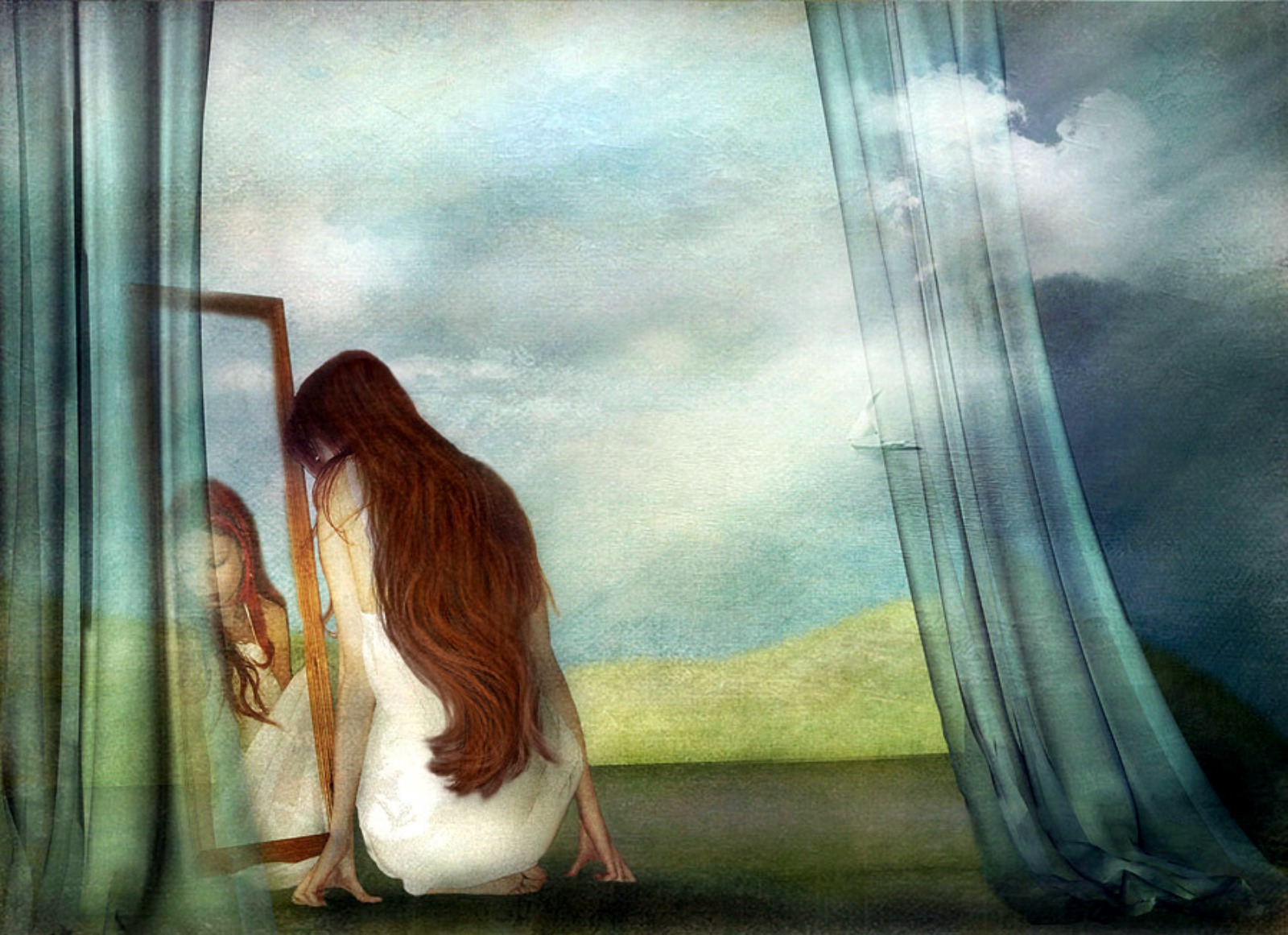
The mirror may be a better place to direct our criticism. 

November 20, 2016

The pieces that form us

A look at the concrete mechanisms of human interaction reveals quite an inefficient and undesirable ideal. An engineer might say that the human is the most horribly designed creature; if each human were a piece of machinery, the mechanic will be overwhelmed that each gear is pulsating, scratching the ones near it, and randomly erupting into flames. Quite frustratingly, each gear must be tamed, prodded, and eased into working properly. Each piece requires constant attention and maintenance; otherwise, it will quickly break down.

Perhaps the objectification of humans isn't quite fair in describing the entirety of the human experience. Where the machine is superior to man in terms of raw efficacy and power, humans make up for in their resilience and consciousness. The gears of an engine don't possess a large room for error, a small hiccup in a piston or wheel, and the entire engine collapses. On the other hand, the wide spectrum of human emotions, such as love and empathy, creates in a sense the most advanced form of lubricant. This creates a wide margin for human error, allowing gears to function even if their neighbors were rusting away. 

A possible misconception arises through the usage of such a metaphor: that all machines require an operator. A legitimate machine requires a manual, or some sort of overarching program, to inform each gear of its proper functions. However, the human machine is independent and self-operating. If a wire were to fall out of place, another would immediately replace it, constantly maintaining the cohesiveness of the entire unit. This potential allows for entire sections to blow up and fall apart, and the machine will quickly rebuild its missing parts. 

The capacity for such exquisite emotions allows for the gears of the human machines to mold and adapt to varying circumstances; when one piece is entrenched in depression and fails to operate, the nearby pieces all collaborate to mend it back together. I might even suggest that the greatest disparity between the humanistic and the mechanical is this vastness of human emotion.

Then comes the battle between differences parts of the machine. Some pieces, are undoubtedly more widely used and apparently differently colored and sized. There seems to be an overwhelming focus on the specs of all the different gears and functions. To those who focus on the criticism of the physical aspects, I have to say forget it. The war on the physical is unending, the differences between each piece will never be undermined or fully overcome. 

In this focus on the physical attributes, we have lost focus on the greatest human strength. Attention to the physical complexions specific to select groups creates a constant battle between the superiority of certain attributes. While eye color or hair texture might be distinctive qualities, emotions are universal. Perhaps we need a shift towards the more encompassing humanistic traits and expand the potential of our emotions to create a sea of "all-embracing tenderness"(Morrison)-that might be enough to diminish the value of physical characteristics. Every second spent on wallowing in the unfairness of our build or complexion is one less second that can be spent on developing a loving, appreciating character. Maybe the gears will fall into place once we emphasize what makes us human. 


November 13, 2016

Thin as a Pencil


I am a pencil, thin and easily broken by the words spoken at me. My creativity is easily expressed through my marks on my paper, and the yellowness covering my body presents a sense of mundane and ordinary. Just as all pencils are expected to be able to scribble on paper, my expectations as a person of yellow color emphasize that I must be intellectually gifted yet physically scrawny. I find myself oftentimes turning upside down at the critique thrown at me and erasing whatever blunders I can find. Though my applicability and usability are immense, I’m ultimately lost in the mass of other pencils, all withholding similar expectations imposed upon them by society. The irony that the very words I create are also the ones that tear me down, makes me terrified of the words I let out. Criticism of an erroneous mark or misplaced word unavoidably engulfs all pencils. This judgment has sucked out all my self-esteem, and I embody the pencil that willingly allows other, more capable beings, to use me, and take advantage of the potential that I never discovered myself.  

Perhaps the greatest the greatest envy I have is that for the pen. The pen and the pencil are vastly different; the pencil creates scribbles while the pen can amass beautiful, bold and confident works of writing. The pen creates timeless and permanent pieces, while I hold the expectation to be erased, blurred, and replaced by the more important and secure ideals. The pen's slender figure is entailed with a soft grip that is pleasurable to hold, while the rough unpleasing edges of the pencil burden the hand that grips it. The pen lies comfortably in its crystal casing, each priced considerably as a luxurious device with individual niches and qualities. 

I've long since lost "my sense of worth"(Morrison) and forgotten the possibilities a pencil can create. Attempts to realize the potential will only be over-ridden by the conceived notion that pencils are expendable, bought in packs of 100, and created as the most basic and bland tool of writing. Perhaps the overexposure of the pencil has lead us to forget that the malleability that only pencil lead can create. As society condemns pencil-work as meaningless scribbles and allows it to dull, it's innate potential will be forgotten. I hope that someone will see the capabilities in me that I cannot see myself, help me sharpen again my lead, and only then, can I create art from the scribbles. 


November 6, 2016

The ugly truth

The constant fight to end beauty standards seems to many like an admirable cause. Yet as it's often the case, these righteous endeavors bear with them many bothersome issues. Doesn't it seem strange that the ones with the strongest, loudest voices against beauty standards are also the ones who dump makeup on themselves and buy the trendiest outfits in an attempt to beautify themselves? It's always bothered me that the hypocrite is myself. 

I so easily rationalize to look beyond the physical appearance of others and find the prevalent problems with societally defined standards of attractiveness, yet I can't escape the encompassing force of judgment. I've felt such a tear in character between the rational, well-meaning man seeking equality and the instinctive, and more powerful judging man. It bothers me that every person proclaiming to end the tyranny of beauty is also the one seeking the most attractive spouse. 

Of course, I feel a terrible imagining the problems faced by the ones societally deemed "ugly". To imagine waking up each morning "trying to discover the secret of the ugliness"(Morrison 45) in the mirror is a thought so gruesome and unsettling that any person with any empathy at all will feel for. I can hardly imagine walking through the hallways attempting to avoid the gazes of others and praying each night for someone, anyone, to find me attractive enough to date. Then again, I feel so terrible knowing that I will be the one who'll be judging as well, and sometimes I feel as if all we can do is feel bad for that person; as if sympathy will help cure their ugliness. 

If Pecola lived in our school today, I would certainly wish with all my heart that someone would find her beautiful, but I know that I would never even consider her as someone lovable. As Pecola walks through Troy High receiving sympathy and blessings from each individual before she's brushed off and walks home each day still alone. I think that's the issue, that we're treating those who are ugly as a problem, hoping that someone will solve it, but desperately avoiding the problem ourselves. Those who aren't beautiful are objectified into a pitiful creature in need of sympathy; a poor thing everyone hopes that another person will come along and take home while they themselves walk home to the comfort of their perfectly groomed cats and dogs. 

So then what is there left to do? The fight between the morally right ideals and the reality that actually takes control of our lives is ever prevalent. Every man that I know will wish for themselves to find the most beautiful girl, and leave the issue of morality up to verbal debate and others to deal with. 

Should I attempt to correct my own ideal of beauty, and find the traditional "ugliness" to be mesmerizing, or should I attempt to completely remove all judgment of appearance? Perhaps the problem isn't in informing others the many detrimental issues with beauty standards, almost everyone has already experienced its harmful effects, but to dissect it more carefully and find a way to approach the problem at hand. 

In all honesty, I wish I could say I have a solution, and that our fight on outward appearance can finally end, but alas I'm just as lost as the next person. I can completely acknowledge the presence of the problem, but that doesn't make it any smaller. Perhaps all I can do for now is engage in small battles of morality each day with myself, and hope that someone will find a cure to the hypocritical problem of beauty.